
FLAG GUIDE
Flag of United Kingdom
Europe
Flag origins
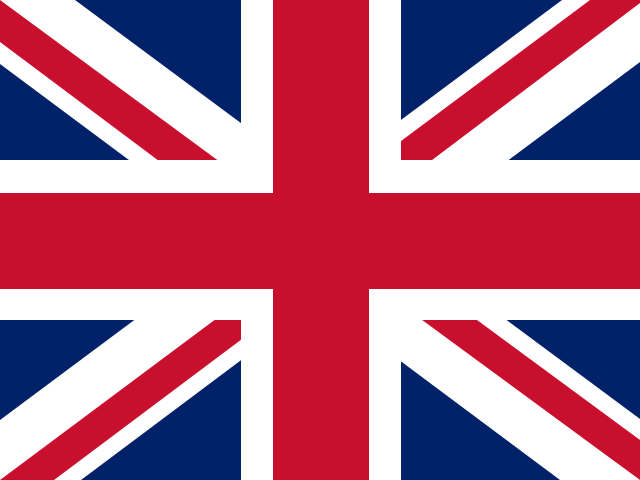
The United Kingdom’s flag is commonly called the Union Jack and is also known as the Union Flag. Its present design combines crosses associated with the patron saints of several countries. The central red cross is the cross of St George, patron saint of England. The white diagonal cross represents St Andrew, patron saint of Scotland. The red diagonal cross placed over it represents St Patrick, patron saint of Ireland. The first Union Flag was created in 1606 by combining the crosses of St George and St Andrew to reflect England and Scotland sharing a monarch. The cross of St Patrick was added following union with Ireland in 1801, producing the current design.
Flag story
Looking at the Union Jack, you might wonder: if England, Scotland and Northern Ireland are represented, where is Wales? The Welsh red dragon does not appear on the flag. When the first Union Flag was created in 1606, Wales had already been legally incorporated into England and was not treated as a separate kingdom in the design. The Royal Household explains its absence on this basis. The flag also looks symmetrical at first glance, but is not perfectly symmetrical. St Patrick’s red diagonal cross is offset rather than centered within St Andrew’s white diagonal cross, allowing both to remain visible. That means a knowledgeable observer can tell when the flag is flown upside down.
Flag features
- Colors
- Red, White, Blue / light blue
- Symbols
- Cross, Diagonal lines / bands, Union Jack, Triangle
- Island country
- Yes
- Landlocked
- No
Editorial notes and references
Edited by ABELHA WORKS. The English text translates the administrator-edited Japanese description. Legends should be distinguished from documented history. General reference links do not substantiate every statement in the text.
 Australia
 Cook Islands
 Tuvalu
 Iceland