
FLAG GUIDE
Flag of Canada
North America
Flag origins
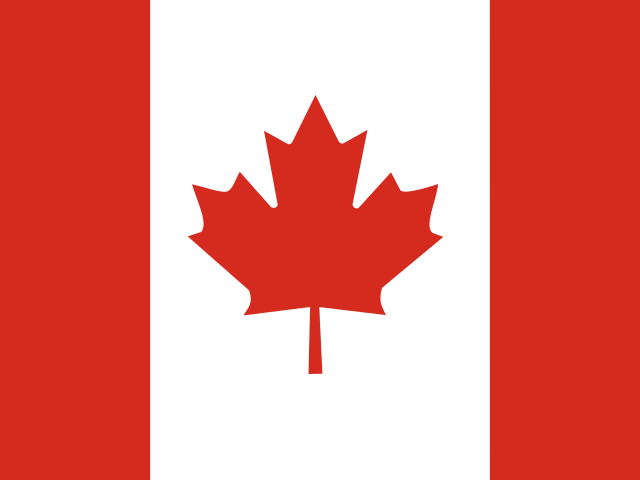
Canada’s flag is divided vertically into red, white and red, with a red maple leaf in the center. Red and white are Canada’s official national colors. Their historical associations are explained as red with Britain and white with the French royal tradition. The maple leaf was already widely used as a Canadian symbol in the nineteenth century, appearing on military badges, coins and sporting emblems. It now represents the country itself. The present national flag was officially adopted on February 15, 1965.
Flag story
The maple leaf on Canada’s flag is not a botanically exact depiction of a particular maple species. It has eleven points, but these do not mean that Canada has eleven provinces and territories. The stylized shape was designed to remain recognizable from a distance and when the flag is fluttering in the wind. Thousands of proposals were considered before the present simple red-white-red design with a single leaf was selected. Before then, a Red Ensign incorporating the British flag had long been used in Canada. Growing discussion in the 1960s about creating a distinctively Canadian flag led to the current design.
Flag features
- Colors
- Red, White
- Symbols
- leaf, Vertical stripes, Coat of arms / emblem, Plants / flowers
- Island country
- No
- Landlocked
- No
Editorial notes and references
Edited by ABELHA WORKS. The English text translates the administrator-edited Japanese description. Legends should be distinguished from documented history. General reference links do not substantiate every statement in the text.
 Mexico
 Afghanistan
 Portugal
 Angola