
FLAG GUIDE
Flag of Germany
Europe
Flag origins
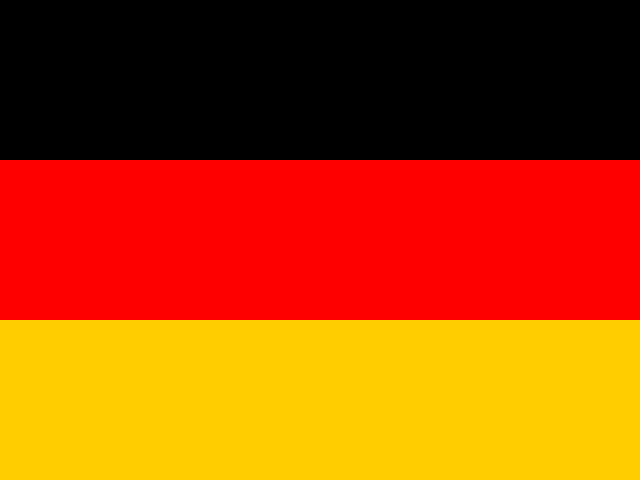
Germany’s flag consists of three horizontal bands: black at the top, red in the middle and gold, shown as yellow, at the bottom. The exact origin of these colors is not fully settled. The German Bundestag presents the uniforms of the Lützow Volunteer Corps during the Napoleonic Wars as a leading explanation: black uniforms with red trim and gold-colored buttons brought the three colors together. They later became symbols of movements for national unity and civil liberty in nineteenth-century Germany. Black-red-gold flags were prominent at the Hambach Festival of 1832 and during the revolutions of 1848–1849. Rather than assigning a simple separate meaning to each color, it is more accurate to understand the combination as representing a history of unity and freedom.
Flag story
Germany has not always used black, red and gold. The German Empire founded in 1871 used black, white and red. Black and white were associated with Prussia, and red with the Hanseatic cities; this combination became the national colors after unification under Bismarck. Black-red-gold returned with the Weimar Republic after the First World War, disappeared again under the Nazi regime, and was officially adopted by West Germany in 1949 as a symbol of the democratic tradition of freedom. East and West Germany initially used the same black-red-gold flag. In 1959, East Germany added its coat of arms with a hammer, compasses and ears of grain. Reunification in 1990 made the plain tricolour the flag of united Germany.
Flag features
- Colors
- Black, Red, Yellow / gold
- Symbols
- Horizontal stripes
- Island country
- No
- Landlocked
- No
Editorial notes and references
Edited by ABELHA WORKS. The English text translates the administrator-edited Japanese description. Legends should be distinguished from documented history. General reference links do not substantiate every statement in the text.
 Uganda
 Ecuador
 Egypt
 Zimbabwe