
FLAG GUIDE
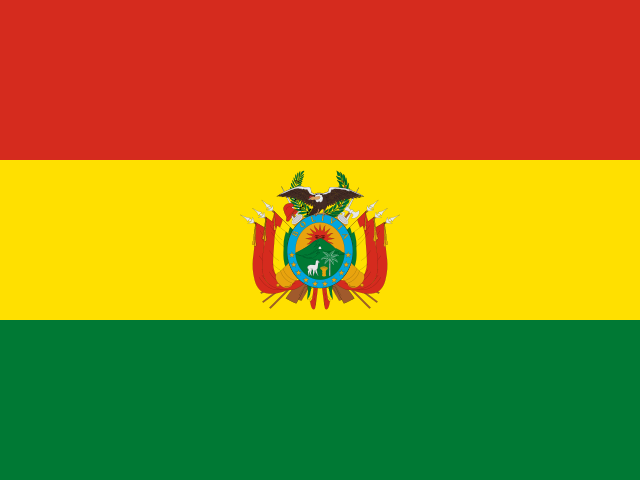
Flag of Bolivia
South America
Flag origins
Bolivia’s flag is a horizontal red-yellow-green tricolour. Red represents the blood and courage of heroes who fought for independence and the homeland; yellow mineral wealth and national riches; and green nature, forests and hope. The basic design was adopted in 1851 and reaffirmed by decree in 1888. Government flags may include the national coat of arms, while the ordinary flag is the plain tricolour. The arms bear the country’s name, a condor representing strength and freedom, Cerro Rico at Potosí, a llama associated with the Andes, and wheat representing agricultural produce. The rising sun behind the mountain symbolizes the nation’s birth and bright future.
Flag story
Bolivia’s first flag was adopted at independence in 1825, but several changes preceded the current color arrangement of 1851. The tricolour is not Bolivia’s only state symbol. Since the 2009 Constitution, the Wiphala, a colorful checkerboard flag associated with Indigenous cultures, has also been recognized as a national symbol. It often flies beside the tricolour at government events. Bolivia’s Ministry of Foreign Affairs treats the tricolour and Wiphala, among other symbols, as expressions of unity in diversity.
Flag features
- Colors
- Red, Green, Yellow / gold, Black, White, Blue / light blue, Brown
- Symbols
- Animal, Coat of arms / emblem, Lettering, Horizontal stripes, Sun, Plants / flowers
- Island country
- No
- Landlocked
- Yes
Editorial notes and references
Edited by ABELHA WORKS. The English text translates the administrator-edited Japanese description. Legends should be distinguished from documented history. General reference links do not substantiate every statement in the text.
 Ecuador
 Egypt
 Serbia
 Zimbabwe