
FLAG GUIDE
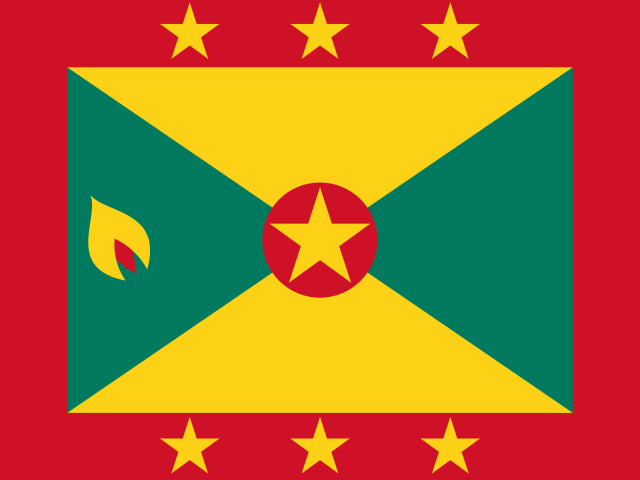
Flag of Grenada
North America
Flag origins
Grenada’s red-yellow-green flag depicts stars and nutmeg. Designed by Anthony C. George, it was adopted at independence from Britain on February 7, 1974. Red represents passion, courage, vitality and the wish for freedom; its outer border expresses determination to protect harmony and unity. Gold represents wisdom, sunshine, island warmth and friendliness. Green represents fertile land, vegetation and agriculture. There are seven stars. Government explanations associate them with seven parishes and national hopes and ideals. Another explanation links the central star with the capital, St George’s, and six outer stars with the island’s six parishes. The nutmeg near the hoist represents the long-established spice industry and the name Spice Island.
Flag story
Nutmeg on a national flag is distinctive. Nutmeg and cocoa have long mattered to Grenada’s agriculture, and the government still promotes it as the Spice Island. The emblem therefore represents an industry and international identity, not just a plant. It is easy to mistake the reddish fruit for a pomegranate, especially because Grenada resembles the Spanish word granada, meaning pomegranate.
Flag features
- Colors
- Red, Yellow / gold, Green
- Symbols
- Coat of arms / emblem, Diagonal lines / bands, Circle, Star, Plants / flowers, Triangle
- Island country
- Yes
- Landlocked
- No
Editorial notes and references
Edited by ABELHA WORKS. The English text translates the administrator-edited Japanese description. Legends should be distinguished from documented history. General reference links do not substantiate every statement in the text.
 Dominica
 Ethiopia
 Namibia
 Mozambique